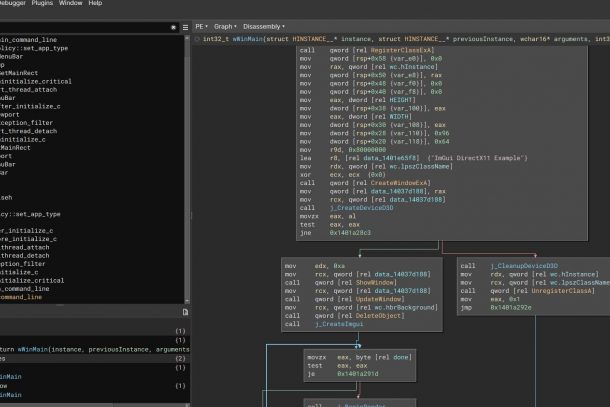
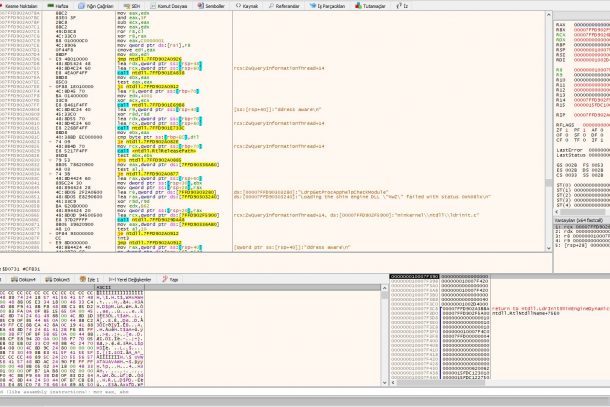
C++ CRC koruma, Visual Studio ile derlenen bir uygulamanın değiştirilip değiştirilmediğini hızlıca anlamanın pratik yoludur.
Bu rehberde CRC32 ile .text bütünlük kontrolünü adım adım kuracağız. Amaç “kırılamaz bir kilit” değil;
bozulma, yanlış sürüm ve basit patch gibi durumları erkenden fark etmektir.
CRC nedir, ne işe yarar?
- CRC (Cyclic Redundancy Check), bir veri bloğundan kısa bir kontrol değeri üretir.
- Veri değişirse CRC de büyük olasılıkla değişir. Böylece değişiklik/bozulma tespiti yaparsın.
- CRC kriptografik değildir; hızlı ve pratik bir bütünlük kontrolü yaklaşımıdır.
C++ CRC Koruma Mantığı (CRC32 ile bütünlük kontrolü)
Temel fikir basit: Uygulamanın “beklenen” bir CRC değeri olur. Program açılırken kendi dosyasının (veya belirli bir bölümünün) CRC’sini hesaplar ve beklenen değerle karşılaştırır. Uyuşmazlık varsa “dosya değişmiş olabilir” diye tepki verir.
Bu noktada C++ CRC koruma yaklaşımı, özellikle dosya bozulması ve basit patch’leri erkenden yakalamayı hedefler.
CRC, tek başına “anti-crack” değildir. Buradaki amaç; bozulma, yanlış sürüm ve istenmeyen değişiklik gibi durumları hızlıca yakalamaktır.
Neyi CRC’lemek daha mantıklı?
İki yaygın yaklaşım vardır:
| Yaklaşım | Artısı | Eksisi |
|---|---|---|
| Tüm EXE/DLL dosyasını CRC’lemek | Uygulaması çok basit | “Beklenen CRC” değeri dosyanın içine yazılıysa, kendi kendine referans problemi çıkar (CRC değişir). İmzalama/paketleme gibi süreçler CRC’yi etkileyebilir. |
Sadece kritik bölümü CRC’lemek (örn. .text) |
Kod değişikliklerini hedefli yakalar, daha stabil | PE section okuma/parçalama gerekir (biraz daha uzun kod) |
Bu yazıda pratikte daha sağlıklı olduğu için .text (kod) bölümünü CRC32 ile doğrulama yaklaşımını kullanıyoruz.
Visual Studio’da proje kurulumu
- Console App (C++) oluştur.
- Platform: x64 seç (güncel Windows’ta yaygın).
- Language Standard: C++20 (veya C++17).
- Tek dosya olarak
crc_integrity.cppekle ve aşağıdaki kodu yapıştır.
C++ CRC Koruma için .text CRC32 doğrulaması
Aşağıdaki örnek, C++ CRC koruma için CRC32 tabanlı bir bütünlük kontrolü uygular:
- Kendi EXE yolunu bulur (
GetModuleFileNameW). - Dosyayı memory-map eder (hızlı okuma).
- PE header’dan
.textsection’ını bulur. .textverisinin CRC32’sini hesaplar ve beklenen değerle karşılaştırır.
#define NOMINMAX
#include <Windows.h>

#include <cstdint>
#include <filesystem>
#include <iostream>
#include <stdexcept>
#include <string>
#include <vector>

// ------------------------------------------------------------
// CRC32 (Table-based) - hızlı ve yaygın
// ------------------------------------------------------------
static uint32_t g_crc32_table[256];
static bool g_crc32_ready = false;

static void crc32_init() {
    for (uint32_t i = 0; i < 256; ++i) {
        uint32_t c = i;
        for (int k = 0; k < 8; ++k) {
            c = (c & 1) ? (0xEDB88320u ^ (c >> 1)) : (c >> 1);
        }
        g_crc32_table[i] = c;
    }
    g_crc32_ready = true;
}

static uint32_t crc32_update(uint32_t crc, const uint8_t* data, size_t len) {
    if (!g_crc32_ready) crc32_init();
    crc = ~crc;
    for (size_t i = 0; i < len; ++i) {
        crc = g_crc32_table[(crc ^ data[i]) & 0xFF] ^ (crc >> 8);
    }
    return ~crc;
}

// ------------------------------------------------------------
// Küçük RAII HANDLE sarmalayıcı
// ------------------------------------------------------------
class unique_handle {
public:
    unique_handle() noexcept = default;
    explicit unique_handle(HANDLE h) noexcept : h_(h) {}
    ~unique_handle() { reset(); }

    unique_handle(const unique_handle&) = delete;
    unique_handle& operator=(const unique_handle&) = delete;

    unique_handle(unique_handle&& other) noexcept : h_(other.h_) { other.h_ = nullptr; }
    unique_handle& operator=(unique_handle&& other) noexcept {
        if (this != &other) {
            reset();
            h_ = other.h_;
            other.h_ = nullptr;
        }
        return *this;
    }

    HANDLE get() const noexcept { return h_; }
    explicit operator bool() const noexcept { return h_ && h_ != INVALID_HANDLE_VALUE; }

    void reset(HANDLE h = nullptr) noexcept {
        if (h_ && h_ != INVALID_HANDLE_VALUE) CloseHandle(h_);
        h_ = h;
    }

private:
    HANDLE h_ = nullptr;
};

// ------------------------------------------------------------
// Dosyayı memory-map et
// ------------------------------------------------------------
struct mapped_file {
    unique_handle file;
    unique_handle mapping;
    const std::byte* data = nullptr;
    size_t size = 0;

    mapped_file() = default;
    ~mapped_file() { reset_view(); }

    mapped_file(const mapped_file&) = delete;
    mapped_file& operator=(const mapped_file&) = delete;

    mapped_file(mapped_file&& other) noexcept
        : file(std::move(other.file)),
          mapping(std::move(other.mapping)),
          data(other.data),
          size(other.size)
    {
        other.data = nullptr;
        other.size = 0;
    }

    mapped_file& operator=(mapped_file&& other) noexcept {
        if (this != &other) {
            reset_view();
            mapping = std::move(other.mapping);
            file = std::move(other.file);
            data = other.data;
            size = other.size;
            other.data = nullptr;
            other.size = 0;
        }
        return *this;
    }

private:
    void reset_view() noexcept {
        if (data) {
            UnmapViewOfFile(data);
            data = nullptr;
        }
        size = 0;
    }
};

static mapped_file map_whole_file(const std::filesystem::path& p) {
    mapped_file mf;

    mf.file.reset(CreateFileW(p.c_str(), GENERIC_READ, FILE_SHARE_READ, nullptr,
                             OPEN_EXISTING, FILE_ATTRIBUTE_NORMAL, nullptr));
    if (!mf.file) throw std::runtime_error("CreateFileW failed");

    LARGE_INTEGER li{};
    if (!GetFileSizeEx(mf.file.get(), &li) || li.QuadPart <= 0)
        throw std::runtime_error("GetFileSizeEx failed");

    mf.size = static_cast<size_t>(li.QuadPart);

    mf.mapping.reset(CreateFileMappingW(mf.file.get(), nullptr, PAGE_READONLY, 0, 0, nullptr));
    if (!mf.mapping) throw std::runtime_error("CreateFileMappingW failed");

    void* view = MapViewOfFile(mf.mapping.get(), FILE_MAP_READ, 0, 0, 0);
    if (!view) throw std::runtime_error("MapViewOfFile failed");

    mf.data = reinterpret_cast<const std::byte*>(view);
    return mf;
}

template<typename T>
static const T* view_as(const std::byte* base, size_t size, size_t offset) {
    if (offset > size || (size - offset) < sizeof(T)) return nullptr;
    return reinterpret_cast<const T*>(base + offset);
}

static std::filesystem::path get_own_exe_path() {
    wchar_t buf[MAX_PATH]{};
    DWORD n = GetModuleFileNameW(nullptr, buf, MAX_PATH);
    if (n == 0 || n >= MAX_PATH) return {};
    return std::filesystem::path(std::wstring(buf, buf + n));
}

// ------------------------------------------------------------
// Beklenen CRC değerini .rdata tarafında tutup memory'den okutuyoruz.
// Not: "volatile" kullanmak, derleyicinin bu değeri immediate'a çevirmesini zorlaştırır.
// ------------------------------------------------------------
alignas(4) static volatile uint32_t g_expected_text_crc = 0x00000000u;

// ------------------------------------------------------------
// .text section CRC hesapla
// ------------------------------------------------------------
static bool compute_text_crc(const std::filesystem::path& exePath, uint32_t& outCrc) {
    auto mf = map_whole_file(exePath);

    const auto* dos = view_as<IMAGE_DOS_HEADER>(mf.data, mf.size, 0);
    if (!dos || dos->e_magic != IMAGE_DOS_SIGNATURE) return false;

    const size_t nt_off = static_cast<size_t>(dos->e_lfanew);
    const auto* sig = view_as<DWORD>(mf.data, mf.size, nt_off);
    if (!sig || *sig != IMAGE_NT_SIGNATURE) return false;

    const auto* fileHdr = view_as<IMAGE_FILE_HEADER>(mf.data, mf.size, nt_off + sizeof(DWORD));
    if (!fileHdr) return false;

    const size_t opt_off = nt_off + sizeof(DWORD) + sizeof(IMAGE_FILE_HEADER);
    const size_t sec_off = opt_off + fileHdr->SizeOfOptionalHeader;

    // Section table
    for (WORD i = 0; i < fileHdr->NumberOfSections; ++i) {
        const auto* sh = view_as<IMAGE_SECTION_HEADER>(mf.data, mf.size, sec_off + i * sizeof(IMAGE_SECTION_HEADER));
        if (!sh) return false;

        char name[9]{}; // 8 byte + null
        memcpy(name, sh->Name, 8);

        if (std::string_view(name) == ".text") {
            const size_t raw = sh->PointerToRawData;
            const size_t rawSize = sh->SizeOfRawData;

            if (raw == 0 || rawSize == 0) return false;
            if (raw > mf.size || (mf.size - raw) < rawSize) return false;

            const auto* bytes = reinterpret_cast<const uint8_t*>(mf.data + raw);
            outCrc = crc32_update(0u, bytes, rawSize);
            return true;
        }
    }

    return false;
}

// ------------------------------------------------------------
// Bütünlük kontrolü
// ------------------------------------------------------------
static bool verify_self_integrity() {
    const auto exe = get_own_exe_path();
    if (exe.empty()) return false;

    uint32_t crc = 0;
    if (!compute_text_crc(exe, crc)) return false;

    // volatile read
    const uint32_t expected = g_expected_text_crc;
    return (expected != 0u) && (crc == expected);
}

// ------------------------------------------------------------
// Kullanım:
// 1) İlk build'te g_expected_text_crc 0 iken çalıştırırsan FAIL verir.
// 2) --print-text-crc ile çalıştır: .text CRC'yi yazdırır.
// 3) Yazdırılan değeri g_expected_text_crc içine koy, tekrar build et.
// ------------------------------------------------------------
int wmain(int argc, wchar_t** argv) {
    try {
        const auto exe = get_own_exe_path();
        if (exe.empty()) {
            std::wcerr << L"[!] EXE path not found.\n";
            return 1;
        }

        if (argc >= 2 && std::wstring_view(argv[1]) == L"--print-text-crc") {
            uint32_t crc = 0;
            if (!compute_text_crc(exe, crc)) {
                std::wcerr << L"[!] CRC compute failed.\n";
                return 1;
            }
            std::wcout << L".text CRC32 = 0x" << std::hex << crc << std::dec << L"\n";
            std::wcout << L"Bu değeri g_expected_text_crc alanına yazıp tekrar build et.\n";
            return 0;
        }

        if (!verify_self_integrity()) {
            std::wcerr << L"[!] Integrity check FAILED: Kod bölümü değişmiş olabilir.\n";
            std::wcerr << L"İpucu: --print-text-crc ile CRC değerini yazdır.\n";
            return 1;
        }

        std::wcout << L"[OK] Integrity check PASSED.\n";
        // ... uygulamanın asıl işi ...
        return 0;
    }
    catch (const std::exception& ex) {
        std::wcerr << L"[!] Exception: " << ex.what() << L"\n";
        return 1;
    }
}
Beklenen CRC değeri nasıl üretilir?
Beklenen değer .rdata tarafında tutulduğu için, bu değeri güncellemek genellikle .text CRC’sini bozmaz.
Bu da “kısır döngü” riskini azaltır.
- Projeyi bir kez derle (ilk haliyle,
g_expected_text_crc = 0iken). - EXE’yi şu argümanla çalıştır:
--print-text-crc - Konsolda yazan değeri al, örneğin
0x3A12F9C4. - Bu değeri koda yapıştır:
g_expected_text_crc = 0x3A12F9C4u; - Tekrar derle ve normal çalıştır. Kontrol “OK” dönecektir.
yourapp.exe --print-text-crcC++ CRC Koruma: Sınırlar ve iyi pratikler
C++ CRC koruma tek başına kırılmaz değildir; ancak dağıtım hataları ve temel müdahaleleri tespit etmekte etkilidir. CRC32 hızlıdır ve uygulamaya entegrasyonu kolaydır. İhtiyaca göre kontrolü güçlendirmek mümkündür.
- Kontrolü sadece açılışta değil, kritik akışlarda da (ör. lisans kontrolünden önce) yapabilirsin.
.textyanında seçili başka bölümleri de doğrulayabilirsin (kritik tablolar gibi).- Gerektiğinde CRC’ye ek olarak imza doğrulama veya kriptografik hash yaklaşımı değerlendirilebilir.